
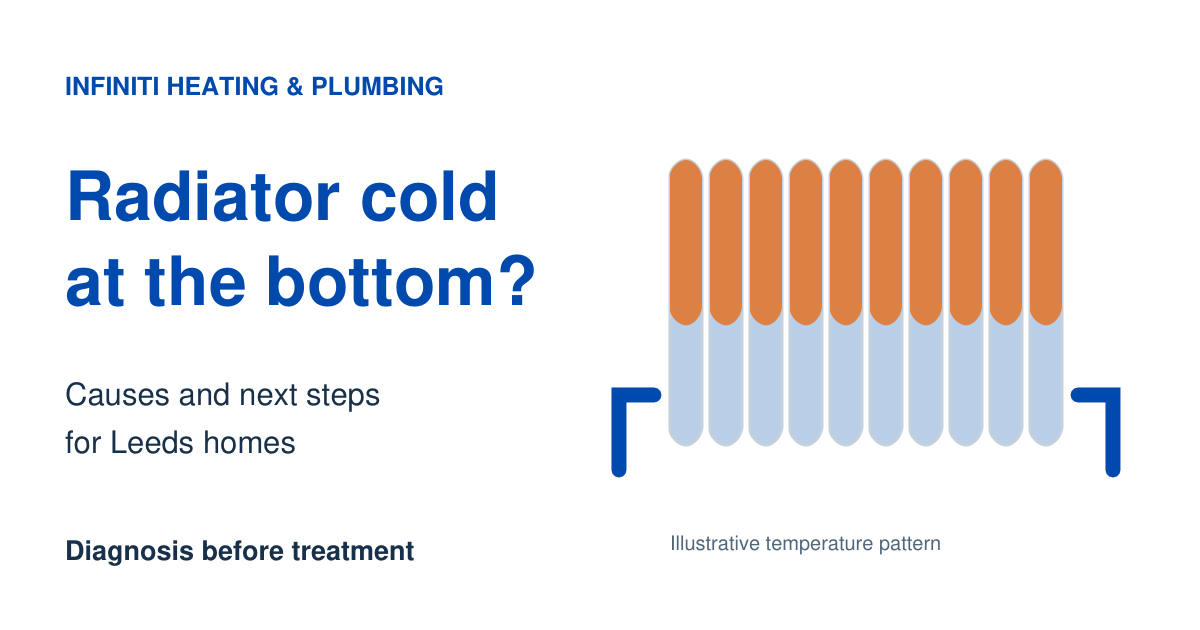
A radiator that is hot at the top but persistently cold across the bottom can have restricted water circulation, often associated with sludge. It is a clue, not a diagnosis: valve or wider flow problems can also matter. A slightly cooler bottom can be normal, especially if the room still warms properly.
If you are looking at a cold radiator in your Leeds home, the useful first question is how much of it stays cold and whether other rooms are affected. That pattern helps an engineer distinguish a local radiator problem from a heating-system fault.
Is a cooler radiator bottom always a fault?
No. A radiator gives heat to the room as water travels through it, so the surface need not be equally hot everywhere. Ideal Heating explains the difference between normal cooling and a substantial cold section.
Look at the whole situation. A modest temperature difference with a comfortable room is different from a large bottom section that remains cold while the upper section is hot and the room struggles to warm. A radiator warming up from cold also needs time before its final pattern is meaningful.
Cold at the bottom, cold at the top or cold all over?
- Hot at the top, distinctly cold at the bottom: sludge or restricted circulation is a possibility.
- Cold at the top: trapped air is a common explanation, particularly alongside gurgling.
- Cold throughout: check whether the heating is calling for heat and the normal radiator control is open. A valve, control or circulation fault may need investigation.
These are starting points, not a way to identify a failed component without testing. Worcester Bosch’s radiator guidance distinguishes bottom cold spots from air collecting near the top and recommends professional assessment where needed.
What could be restricting the heat?
Sludge and corrosion debris
Heating water can carry corrosion products and other debris. Deposits can restrict the passage of water through a radiator, leaving parts of it poorly heated. The condition of the whole system matters, including its water treatment and maintenance history.
Fernox’s heating-system cleaning guidance explains why contaminants should be removed and suitable protection added afterwards. An engineer should assess whether contamination is actually causing your symptoms before recommending cleaning.
Valves and uneven circulation
Not every cold radiator has sludge. Restricted valve operation or uneven flow around the system can leave a radiator under-supplied. If some rooms heat quickly while another stays cold or takes much longer, tell the engineer: balancing or another circulation issue may be relevant.
The same symptom can therefore need different work. A valve repair, a flow adjustment and system cleaning are not interchangeable remedies. Our central heating repairs in Leeds service starts with investigating the symptoms before agreeing the repair.
Safe checks before you call an engineer
You can gather useful information without draining a radiator or opening the boiler. Avoid touching hot surfaces; a radiator and its pipes can burn.
- Check the normal heating controls. Is the heating programme on and is the room thermostat calling for heat? If a thermostatic radiator valve is fitted, check its ordinary user setting. Do not force a stiff valve or dismantle it.
- Compare the rooms. Note whether one radiator, several radiators or an entire floor is affected, and whether the pattern persists once the heating has warmed up.
- Record other symptoms. Is the hot water working? Are there new noises, visible leaks or a boiler fault display? If your boiler has a pressure display, note the reading and refer to its own manual rather than assuming every system uses the same range.
- Think about recent changes. Mention a new radiator, recent plumbing work, a boiler replacement or a problem that started after maintenance.
The Energy Saving Trust guide to thermostats and heating controls explains how room thermostats and radiator controls work together. Checking their normal settings can help you describe the problem accurately.
Leave radiator removal, draining, chemical dosing, pump work and internal boiler checks to an appropriate professional. Do not repeatedly top up a system that keeps losing pressure, or repeatedly reset a boiler fault without following the manufacturer’s guidance and seeking help.
Will bleeding fix a radiator cold at the bottom?
Bleeding releases trapped air; it does not remove sludge. It is most relevant to an air-related cold area near the top. If the bottom stays cold after bleeding, repeating the process may simply miss the cause.
If you are unsure which pattern you have, tell the engineer rather than experimenting with valves. Mention any pressure change afterwards as well. The right response should follow the findings, not a blanket instruction to bleed every radiator.
Do you need a powerflush?
A cold bottom does not automatically mean a powerflush is required. Ask for the cause to be checked first, including the heat pattern, valve operation, circulation and evidence of contamination.
Where cleaning is justified, the suitable method depends on the system. Options can include cleaning an individual radiator, a chemical clean or powerflushing. A system-wide approach may be appropriate where contamination affects more than one part of the heating circuit.
Fernox describes powerflushing as high-velocity circulation, rather than simply forcing water through at high pressure. Its guidance also stresses inspection: cleaning can reveal existing weak points in old or corroded components. Ask what the proposed work includes, how the system’s condition will be assessed and what happens if a leak is uncovered.
After a suitable clean, the engineer should explain the water treatment, protection and ongoing checks recommended for your system. A filter can help collect circulating debris, but it is not a substitute for diagnosing a radiator fault.
What if the radiator is new?
A new radiator does not prove the existing heating water, valves or circulation are in good condition. Tell the installer when the problem started and whether the radiator ever heated properly.
Likewise, replacing the boiler alone does not establish the cause of a cold radiator. Before agreeing a replacement, ask which findings explain the fault and whether the proposed work addresses them. Avoid paying for a major change solely because one radiator has a cold patch.
When to arrange professional help
Arrange an assessment when a substantial cold area persists, a room will not warm properly, several radiators are affected or the problem returns after a previous repair. Visible leaks, recurring pressure loss, loss of heating or hot water and fault displays are additional reasons to seek help promptly.
When you enquire, send your postcode, the affected rooms, whether hot water works and any recent changes. A clear photograph of the radiator or control display can help with the conversation, but cannot confirm sludge or a failed component by itself.
Frequently asked questions
Does a cold bottom mean the radiator needs replacing?
No. The cause may involve water condition, valves or circulation. An inspection can establish whether the radiator itself is damaged or whether other work is more appropriate.
Can sludge be confirmed just by feeling the radiator?
No. The temperature pattern is useful evidence, but similar symptoms can have more than one cause. Professional checks help avoid choosing the wrong repair.
Why is only one radiator affected?
A problem can be local to that radiator or its valves, while the rest of the system still heats. Tell the engineer which rooms work normally and which do not.
Should I turn the thermostat up to compensate?
A higher setting does not remove a restriction. If a room remains cold despite the heating running normally, investigate the fault rather than relying on progressively higher settings.
Get help with cold radiators in Leeds
Infiniti Heating & Plumbing provides 24/7 heating help and same-day help across Leeds and West Yorkshire, including Horsforth, Headingley and Roundhay. We will discuss your symptoms, explain the next step and confirm charges before work proceeds.
Call 07886 890805 or message our friendly team on WhatsApp with your postcode and a short description of the problem.